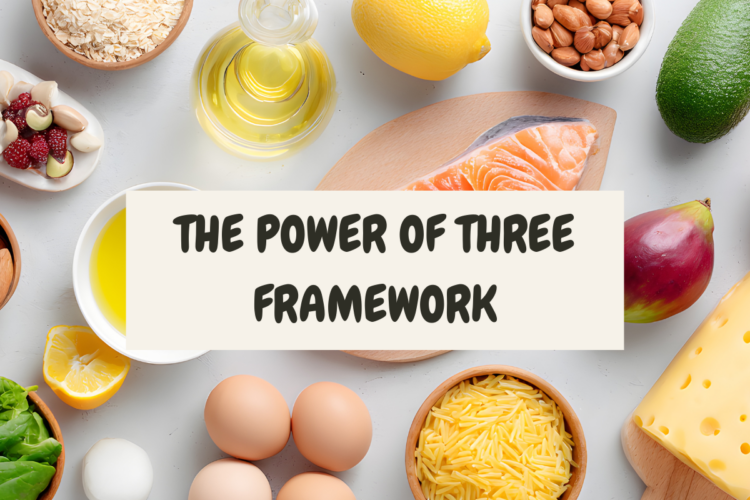
Building balanced, nutrient-dense meals doesn’t have to be complicated. By following a simple framework—what I call The Power of Three—you can create nourishing meals and snacks that combine protein, healthy fats, and fibre in every plate. This powerful trio helps stabilise energy, support digestion, and keep hunger at bay, making it easier to feel your best throughout the day. Whether you’re looking for healthy meal ideas for your family, ways to improve your daily nutrition, or just want to understand how to build a balanced plate, this guide will show you how to do it with ease.
Content
- Why These Three? The Science
- How the Three Interact — More Than the Sum of the Parts
- What This Looks Like on Your Plate — Quick Templates
- Portion Guidance & Per-Meal Protein Targets
- Meal & Snack Examples (Shopping-List Friendly)
- Evidence Highlights — Why These Choices Matter
- Safety & Special Considerations
- Frequently Asked Questions
Why These Three? The Science
1) Protein — satiety, muscle, metabolism
Protein is the strongest single macronutrient for increasing feelings of fullness, raising the thermic effect of food (you burn more calories digesting it), and preserving lean mass during weight loss. Higher-protein meals reduce hunger and help prevent overeating later in the day. Clinical reviews and trials show high-protein diets support weight management and protect fat-free mass. PMC+1
Practical takeaways: Aim for a per-meal protein target of about 20–30 g for most adults (older adults often benefit from the upper end). This range also ties to muscle protein synthesis thresholds for leucine (the key amino acid).
What Leucine Thresholds Mean
Leucine is one of the nine essential amino acids — meaning our bodies can’t make it, so we must get it from food. It plays a key role in triggering muscle protein synthesis (MPS) — the process that repairs and builds muscle tissue.
Research shows that for MPS to be “switched on,” a meal needs to provide a minimum amount of leucine — often called the “leucine threshold.”
- This threshold is roughly 2–3 grams of leucine per meal for adults.
- For children and teens, it’s likely a bit lower per meal because of smaller body size but still proportionally important.
When you hit this leucine threshold, your body can effectively use the amino acids from that meal to maintain lean tissue, support metabolism, and keep you strong and energised.
Practically, this means that if you eat smaller amounts of protein frequently, but none of them reach the leucine threshold, your body might not fully activate muscle repair and maintenance each time.
That’s why aiming for 20–30 g of protein per meal, from diverse sources, usually ensures you also meet the 2–3 g leucine mark — making your meals more metabolically effective.
2) Healthy fats — fullness, brain & heart health, vitamins
Monounsaturated and polyunsaturated fats (olive oil, avocados, nuts, seeds, oily fish) support heart health and help you feel satisfied. Replacing saturated fats with unsaturated fats improves cardiovascular risk markers. Fats also help absorb fat-soluble vitamins (A, D, E, K) from your food. AHA Journals+1
Practical takeaways: Include a palm-size portion of healthy fat at meals (a drizzle of olive oil, ¼ avocado, a small handful of nuts/seeds). This slows digestion, enhances flavour, and improves nutrient uptake.
3) Fibre — steady blood sugar, gut health, fullness
Dietary fibre (especially soluble fibre) slows gastric emptying and carbohydrate absorption, which flattens blood sugar spikes and helps maintain fullness. Fermented fibre also feeds beneficial gut bacteria and supports long-term metabolic and immune health. Large prospective studies and reviews link higher fibre intakes with lower risk of cardiovascular disease and mortality. PMC+1
Practical takeaways: Aim to make at least half your plate vegetables or fibre-rich carbs (like whole grains, legumes, and fruit). For most families, the goal is 20–35 grams of fibre per day, depending on age — roughly 14 grams per 1,000 calories consumed.
For example:
- Toddlers (1–3 years): around 15 g/day
- Children (4–8 years): around 20 g/day
- Older kids & teens: 25–30 g/day
- Adults: 30–35 g/day
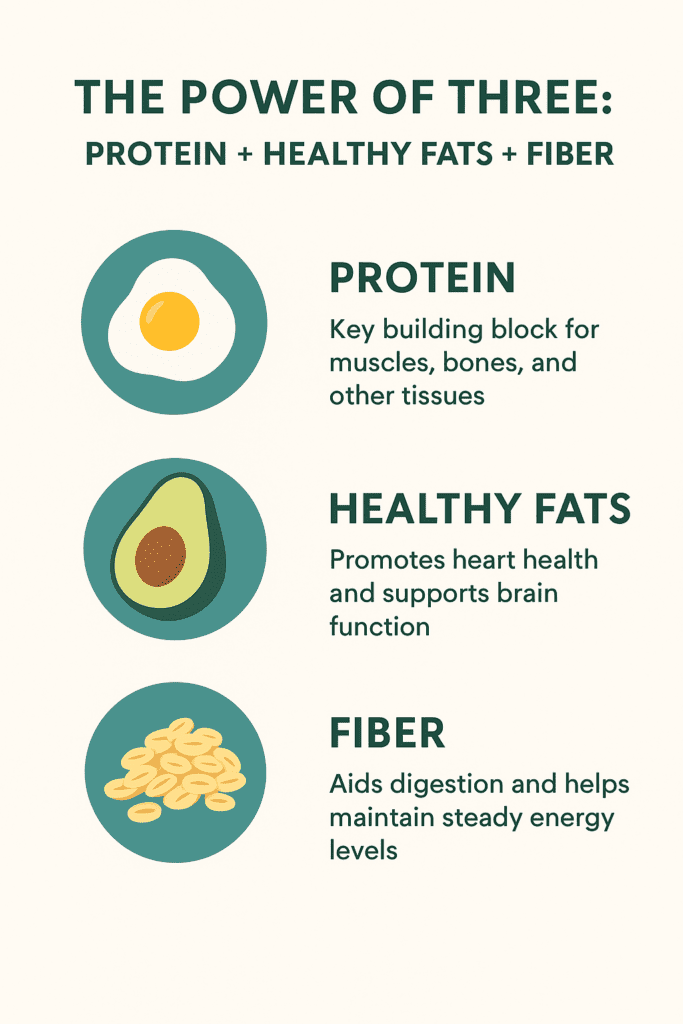
How the Three Interact — More Than the Sum of the Parts
When you combine protein, healthy fats and fibre in one meal, you get synergistic effects:
- Better appetite control: protein drives satiety hormones; fat slows gastric emptying; fibre adds bulk. Together they reduce cravings and snacking. PMC+1
- Smoother blood sugar: fibre and fat slow carbohydrate absorption; protein moderates glycemic responses. This helps kids and adults stay focused between meals. PMC
- Improved nutrient absorption & stability: some vitamins are fat-soluble; healthy fats help you access them from veggies and salad dressings. AHA Journals
- Microbiome & long-term health: fibre feeds gut microbes that produce short-chain fatty acids — linked to reduced inflammation and better metabolic health. Higher fibre intake associates with lower mortality and chronic disease risk. Frontiers+1
What This Looks Like on Your Plate — Quick Templates
Breakfast Examples
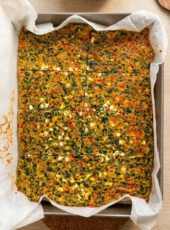
- Savoury: Sheet pan baked eggs with cottage cheese and 3 vegetables
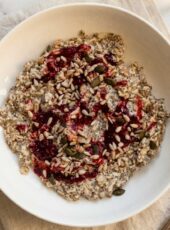
- Sweet: Cherry cocoa breakfast bake
- On-the-go: Cherry spinach kefir
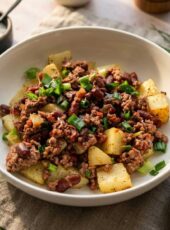
Lunch / Dinner examples
Snacks (power of three in small form)
- Apple slices + 1 tbsp almond butter + 1 tbsp hemp seeds.
- Cottage cheese + sliced cucumber + a drizzle of olive oil + wholegrain cracker.
- Date-sweetened bean brownies
Portion Guidance & Per-Meal Protein Targets
- Batch cook proteins: roast a tray of chicken thighs, poach eggs, or cook a tin of lentils once a week. Portion into 3–4 meals.
- Keep healthy fats handy: stocked nuts, tahini, olive oil, avocado. A spoon of nut/seed butter turns fruit into a balanced snack.
- Always pack a fibre base: precut veg, roasted sweet potatoes, cooked quinoa, wholegrain wraps.
- Smart breakfasts: baked oats with Greek yoghurt; or egg muffins (bake eggs + veg in muffin tin).
- Snack boxes: small containers with cheese cubes, apple slices, and a few walnuts = protein + fat + fibre.
- Use condiments: lemon, mustard, olive oil & vinegar dressings add flavour and help kids eat more veg.
Meal & Snack Examples (Shopping-List Friendly)
A simple weekly short shopping list for the framework:
- Eggs, Greek yoghurt, cottage cheese, canned tuna, chicken thighs
- Oats, quinoa, wholegrain bread/wraps
- Avocados, olive oil, nut butters, mixed nuts & seeds
- Frozen berries, apples, bananas, carrots, spinach, broccoli, bell peppers
- Canned beans/lentils, tahini, mustard, vinegar
Make 3–4 proteins on Sunday; roast veg and grains; portion into containers so assembly takes minutes.
Evidence Highlights — Why These Choices Matter
- Protein for satiety and body composition: randomized trials and reviews show higher protein diets support weight loss and preserve lean mass. PMC+1
- Per-meal protein & leucine targets: synthesis models and consensus suggest ~25–30 g protein per meal (with leucine thresholds) to stimulate muscle protein synthesis, especially important for older adults. PMC+1
- Fibre reduces disease risk: multiple prospective studies and meta-analyses link higher fibre intakes with lower all-cause and cardiovascular mortality. Frontiers+1
- Unsaturated fats & heart health: replacing saturated fats with unsaturated fats (especially polyunsaturated) reduces cardiovascular risk. AHA Journals
Safety & Special Considerations
- Kid portions: children need less absolute protein — aim protein by portion size and serve balanced plates. For infants/toddlers, follow pediatric guidance.
- Kidney disease: very high protein diets should be discussed with a clinician if there is existing kidney disease.
- Allergies: nuts, dairy, eggs — adapt swaps (e.g., seeds instead of nuts, dairy-free yoghurt).
- Gradual fibre increase: if your family’s diet is low in fibre, raise intake slowly and increase water to avoid bloating.
Frequently Asked Questions
Will adding fats make meals too calorie dense?
Fats add calories, but they also increase satiety so people eat less later. The goal is quality fats in moderate amounts — a tablespoon of olive oil or a quarter avocado per meal is a reasonable start. AHA Journals
Can plant proteins work as well as animal proteins?
Yes — but plant proteins may need combining (beans + grain) or a slightly larger portion to match essential amino acid profiles. A cup of lentils or a larger serving of tofu can meet protein targets. MDPI
Is protein powder necessary?
Not necessary — it’s simply a convenient way to hit per-meal targets. Whole foods should be first line; use powders occasionally for convenience.
Final Notes
You don’t need to reinvent every meal. Start by adding one reliable protein, one healthy fat, and one fibre source to each meal or snack. Over time it becomes automatic and your family will benefit from steadier energy, fewer cravings, and better long-term health markers. Little changes compound: one more serving of vegetables, one extra egg or tin of beans in the week — it all adds up.
Read Similar




Affiliate Disclaimer: This website may include affiliate links, which means I may earn a commission if you click through and make a purchase. This comes at no additional cost to you and helps support the content and resources I provide. I only recommend products and services I genuinely believe in and that align with the values of this platform. Your trust is important to me, and I’m committed to transparency. Thank you for your support!