
We’re fortunate to live in a time when any fruit or vegetable is available year-round—tomatoes for our salads, avocados for our smoothies, and even strawberries for a sweet or romantic treat. Thanks to global transport, the world’s produce is always within reach.
But have you ever thought about where these ingredients come from? Embracing the seasonality of food isn’t just about health or cost—it’s about savoring produce at its peak flavor, reducing environmental impact, and connecting with nature’s rhythms. Doesn’t that sound delicious?
Content
Growing Closer to Nature
I am not saying you should, but growing your own herbs or some vegetables can also help get closer and understand better the natural circle of life of plants. There are also psychological benefits to taking care of plants. In a study, 40 older women aged 79.5 ± 8.09 years were monitored and the researchers recorded significantly lower blood pressure and anxiety levels, and that participants were more comfortable and relaxed after taking care of plants.
Gardening is not just for elders, researchers also argue that the less time we spend in nature, the more health and behavioural issues arise, especially for children. Daily contact with the natural environment can benefit health in the long term affecting depression and anxiety symptoms, birth weight, diabetes and obesity, circulatory and heart disease, and contribute to longevity. Gardening or taking care of small plants in the house is actually a cost-effective health intervention.
So if you have never considered it, definitely time to do so :).
We deviated just a little bit but I think it was worth it, and let’s get back into it.
Benefits of Eating Seasonally
Seasonal produce is more nutrient dense & tastes better
A study monitoring the content of vitamin C in broccoli throughout the year found that the content of vitamin C was affected by seasonality, and not if the broccoli was organically grown or not. So, during fall which is broccoli’s season, the amount of vitamin C was twice as high as during spring.
Including seasonal produce in your diet ensures that you also benefit from components that contribute to well-being and longevity. What I mean by that…Let’s take quercetin which is a food component that can prevent lifestyle-related diseases. It is considered one of the most abundant antioxidants in the diet and plays an important role in helping your body combat free radical damage, which is linked to chronic diseases. In a study of the Japanese population, researchers determined the quercetin content in foods available in the market during June and July in or near a town in Hokkaido. The estimated quercetin intake was similar during summer and winter. Quercetin was mainly ingested from onions and green tea, both in summer and in winter. However, vegetables, such as asparagus, green pepper, tomatoes, and red-leaf lettuce, were good sources of quercetin in summer.
Something to keep in mind also is that to meet global demands of local and large-scale production, produce undergoes processes that disturb the natural rhythms of growing and ripening. This process is called post-harvest treatment which is used to slow down maturation and ripening and includes:
- physical treatment such as heat, irradiation, and edible coatings. These affect the flavour of the final product. When crops are transported, they must be harvested early and refrigerated to avoid spoilage and then heated to induce ripening before the produce is sold and this process alters the texture and taste of the final product that ends up on your plate.
- chemical treatment such as antimicrobials, antioxidants, and anti-browning, which again assist in keeping the products intact for display on shelves and
- gaseous treatments
This ensures that the farmers meet the demand all year round, but at the same time, despite the different ripening agents used, fruit & vegetable qualities appear to show that naturally ripened produce tastes and smells better than non-naturally ripened produce. A great example is the banana which is one of the fruit categories that was studied. The research on this was published in 2019 in the International Journal of Food Science.
Seasonality is not limited to plants but affects the nutrition content of other products as well. A great example is dairy products. In 2018, a UK study looked into the effect of season on the content of iodine and selenium in cow milk in Northern Ireland creameries between May 2013 and April 2014. A note here, milk is the most important source of iodine in the U.K. and Ireland. According to this study, the season had an important determining effect on the iodine content of cow’s milk, where iodine concentrations were highest in milk produced in spring compared to autumn months. There were no such differences found in the content of selenium.
Seasonal Produce is Good for Your Wallet
You probably noticed that the price of fruit and vegetables fluctuates throughout the year. This is not a surprise because the price does change according to supply and demand. When food is in its season, there is a higher amount of it available and also there tends to be no additional cost for long-distance transportation, ending up being cheaper than when it is grown and sold out of season. This means that eating seasonally can save you money, meaning you pay less for a higher-quality product! This is the true meaning of being healthy on a budget! How cool is that?
If you are interested in more tips on how to be or eat healthy on a budget, make sure to check the below video for tips.
Support Local Farmers and the Environment by Eating Seasonal Produce
Eating seasonal food supports sustainable consumption patterns according to Macdiarmid in an article published by Cambridge University, especially when the produce consumed is based on local seasonality as the environmental cost is lower. One main reason is that local food needs to travel small distances thus it has less impact on the environment as gas or fuel emissions occur at large during long-distance travel.
Some storage techniques that are used today, such as drying, salting, and smoking, date back to ancient hunter-gatherer and early agricultural societies and use relatively low energy inputs. However, newer technologies such as canning and compressed-gas refrigeration, require much greater energy inputs, and specifically compressed gas refrigeration such as freezing, which requires continual energy input (figure 1).
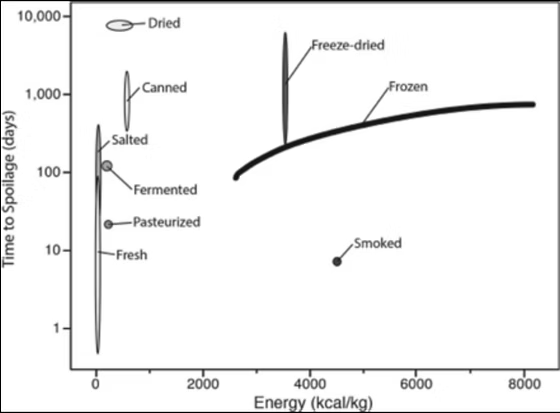
Figure 1: Energy use for food storage (in kilocalories per kilogram [kcal per kg]) (source: Hammond et al, 2015)
In figure 2, you can see graphs that show the shelf life of representative food items, with and without the use of storage technology. The time to spoilage varies widely for untreated food, from less than a day in fish to over a month in root vegetables, such as potatoes, to many years in grains such as wheat that have been naturally dried on the stalk. The increase in shelf life that results from the use of storage technology varies widely by the technology used.
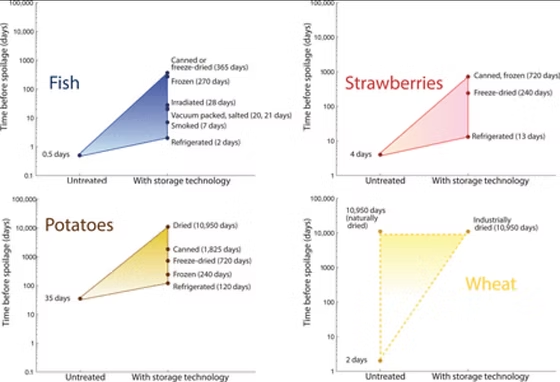
Figure 2: The shelf life of representative food items, with and without the use of storage technology (source: Hammond et al, 2015).
And I know that it is not always possible to eat seasonally, especially if you would like to add a variety of fresh produce to your diet to meet your caloric and nutritional needs, but you can always choose to eat 3 out of your 5 vegetables in season to support the environment, your local farmers, your wallet and your health.
How Do I Know What’s in Season?
If you are based in the US, you can check seasonalfoodguide.org, where you can choose your state, and time period and get the list of local produce.
For the rest of us, a good seasonality chart is LEON seasonal chart (Figure 3), where you can see seasonal fruit and vegetables but also herbs, fish and others including meat.
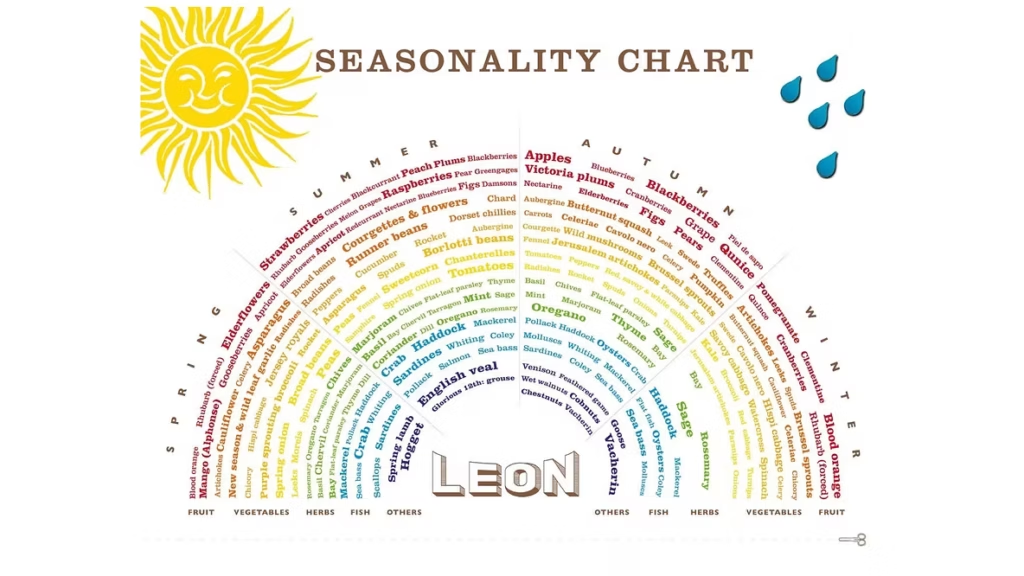
Figure 3: Extracted from Leon: Ingredients and Recipes by Allegra McEvedy, published by Conran Octopus on October 13 (source: The Guardian).
- Spring brings delights like cauliflower, asparagus, peas, spinach, blood oranges, apricots, chives, and basil.
- Summer offers a bounty of berries—strawberries, blackberries, raspberries—along with courgettes, radishes, eggplants, mint, and basil.
- Autumn features apples, grapes, figs, pumpkins, squashes, leeks, thyme, and oregano.
- Winter highlights pomegranates, cranberries, rhubarb, Brussels sprouts, kale, spinach, sage, and rosemary.
You don’t need a drastic change. Start by including seasonal produce on your grocery trips. Farmers’ markets make this easy, offering fresh, local options while supporting the environment and economy.




Affiliate Disclaimer: This website may include affiliate links, which means I may earn a commission if you click through and make a purchase. This comes at no additional cost to you and helps support the content and resources I provide. I only recommend products and services I genuinely believe in and that align with the values of this platform. Your trust is important to me, and I’m committed to transparency. Thank you for your support!





Pingback: How to Eat Healthy on a Budget: Smart Strategies and Delicious Recipes - Greek Mama Life